

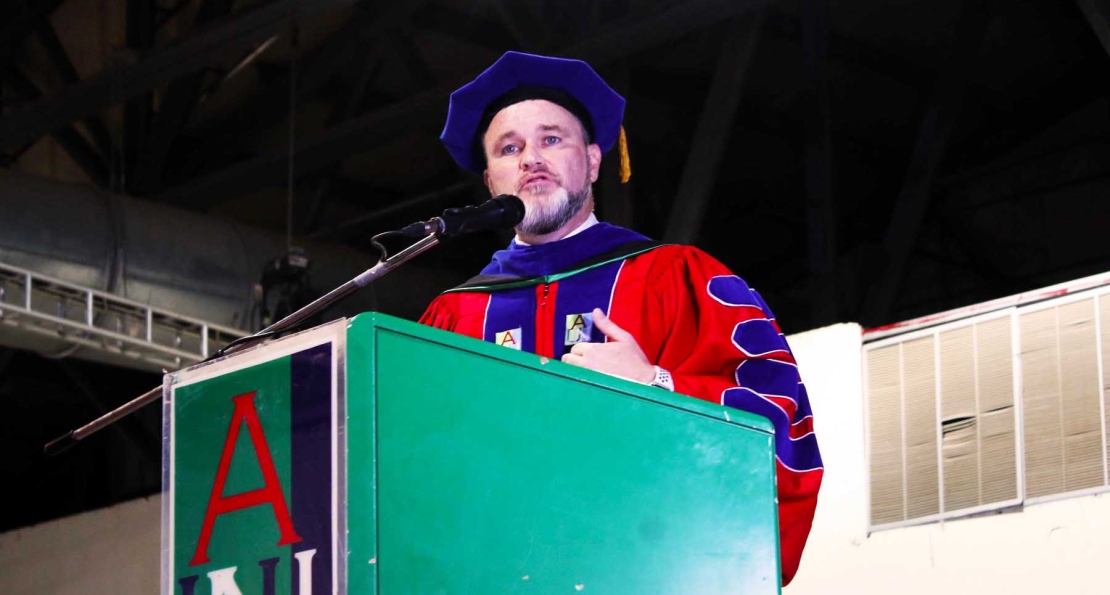
The American University of Nigeria (AUN) formally welcomed students from the Classes of 2028, 2029, 2030, and 2031 at its Fall 2026 Pledge Ceremony on Monday, August 31, challenging them to approach university life with curiosity, integrity, responsibility, and a commitment to service.
Addressing the new students, AUN President Prof. DeWayne Frazier urged them to take ownership of their education and make the most of the opportunities available to them. “Learn boldly, take chances, ask questions, and make mistakes,” he told the students.
Prof. Frazier said an AUN education should prepare students for more than employment, emphasizing the importance of critical thinking, innovation, leadership, and engagement in preparing them for meaningful careers and lives.
He also challenged the perception that AUN is exclusively for wealthy students, noting that more than one-fifth of the University’s students receive scholarship support. He described the pledge as more than a ceremonial tradition, saying it represents a commitment to integrity, service, and character.
Interim Provost Prof. Bolade Agboola reinforced the message, describing AUN as a community built around scholarship, excellence, and intellectual growth. He encouraged the students to make integrity and character central to their university experience.
Vice President Administration, Mr. Daniel Okereke, welcomed the new students and assured them that the University’s administrative structures were in place to support their academic and personal development.
Dean of Students Mr. Sesugh Annger urged the freshmen to recognize that they have an active role in determining the quality of their university experience. “The University is a table set for you. You determine what you fill your plate with,” he said.
Student leaders also shared advice drawn from their own experiences. SGA President Yusuf Abdullahi encouraged the freshmen to embrace growth, persistence, and responsibility, telling them, “Growth begins when comfort ends.”
Honor Society President Bilkisu Alkali urged the students to pursue excellence without compromising their values. “History is only meant for the relentless,” she said.
The ceremony culminated in the formal taking and signing of the AUN pledge, as the freshmen affirmed their commitment to the values and responsibilities of membership in the University community.
For the new students, the ceremony marked more than their official entry into AUN. It set the tone for the years ahead, with the University calling on them to pursue academic excellence, take responsibility for their choices, embrace opportunities, and use their education in service to others.
Reported by Udoh Victoria Clement