

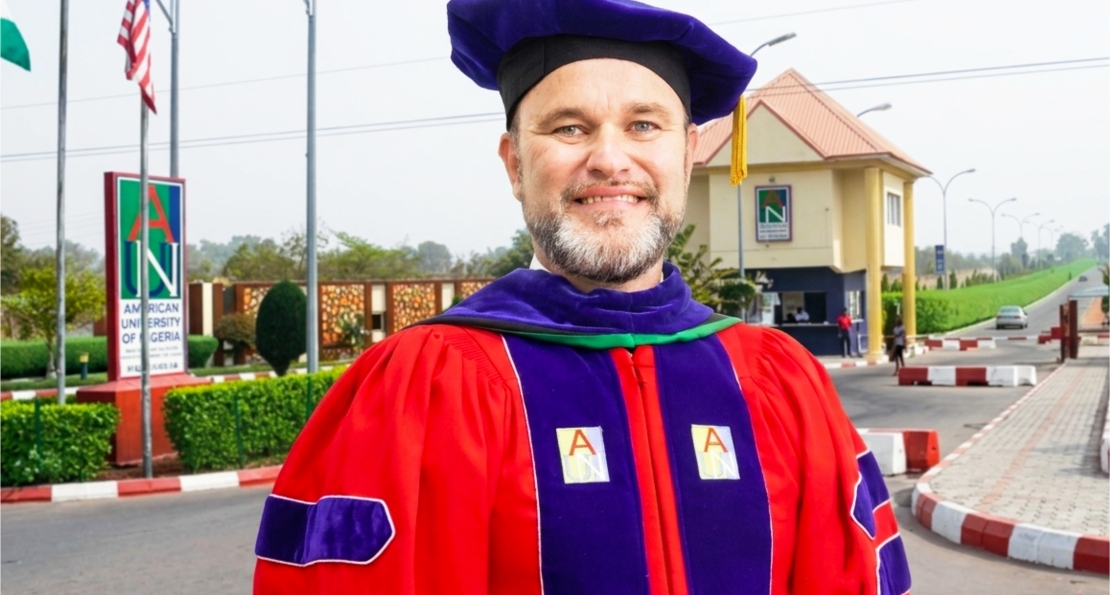
The President, American University of Nigeria (AUN), Prof. DeWayne Frazier, has attributed the decline in international student enrollment in Nigerian universities to restrictive government policies, including high health insurance costs and cumbersome immigration procedures, and called for reforms to make Nigeria more attractive to foreign students.
Speaking in an interview with The Sun on August 4, 2026, Frazier said Nigeria has the potential to become a leading education destination in Africa but warned that recent policies could discourage prospective international students.
He said new health insurance requirements, which reportedly cost foreign students more than $1,100, have increased the cost of studying in Nigeria and made the country's universities less competitive.
“We need to ask ourselves whether we truly want international students to come to Nigeria. They enrich our campuses with different cultures, ideas and experiences while also contributing to the economy,” he said.
Frazier urged the Federal Government to simplify immigration procedures, review policies that increase the cost of education for international students and promote Nigerian universities more effectively across Africa.
He also called for incentives for institutions that attract international students, describing higher education as both an educational and economic enterprise that could help position Nigeria as a regional education hub.
Turning to access to education, Prof. Frazier said university education is not necessarily the right path for every young person, but everyone should have access to quality post-secondary opportunities, including technical and vocational training, entrepreneurship and livelihood programs.
“We need to produce employers, not just employees,” he said, adding that entrepreneurship should be integrated into the nation's education system to tackle unemployment.
Highlighting AUN's community engagement, Frazier described the institution as “a private university with a public mission,” saying its work extends beyond the classroom.
He said the university supports public schools through teacher training, entrepreneurship initiatives and programs for out-of-school children. He also cited AUN's “Feed and Read” initiative, which provides education and life-skills training for Almajiri children.
“We don't just want to feed a child for one day; we want to equip them with education and skills that will provide opportunities for a lifetime,” he said.
Prof. Frazier also spoke about AUN's role in educating and supporting the Chibok girls, saying the university's intervention went beyond classroom instruction.
He said many of the girls arrived at AUN with significant physical and psychological challenges, including post-traumatic stress, health complications and malnutrition, while some had retained bullet fragments from their ordeal.
“The real work was the journey of healing, learning and transformation. We had to care for the whole person physically, mentally and academically,” he said.
He added that several of the girls entered AUN with primary-level education and required extensive academic preparation, including instruction in English and written Hausa, before progressing to degree programs.
While some of the Chibok girls have graduated, Frazier said others are receiving livelihood and entrepreneurship training as part of efforts to support their transition to sustainable livelihoods.
Addressing security concerns in the North-East, Frazier said AUN has maintained measures designed to provide a secure learning environment for students.
He said the university has more than 400 professionally trained security personnel, controlled entry points, perimeter surveillance, regular patrols and extensive lighting, supported by collaboration with community leaders.
“I brought one of my own sons to study here. I would not do that if I believed Yola was unsafe,” he said.
On the growing role of artificial intelligence in education, Frazier said AUN has integrated AI into teaching, curriculum development and assessment. He noted that students recently developed an AI chatbot, “Stanley the Stallion,” named after the university's mascot, to provide information on academic matters and institutional policies.
He stressed, however, the importance of teaching students to use AI ethically and responsibly without allowing it to replace critical thinking.
Prof. Frazier also called on governments, parents, educators and communities to make education a national priority, saying sustained investment in young people is essential to Nigeria's future.
Reported by John Abah